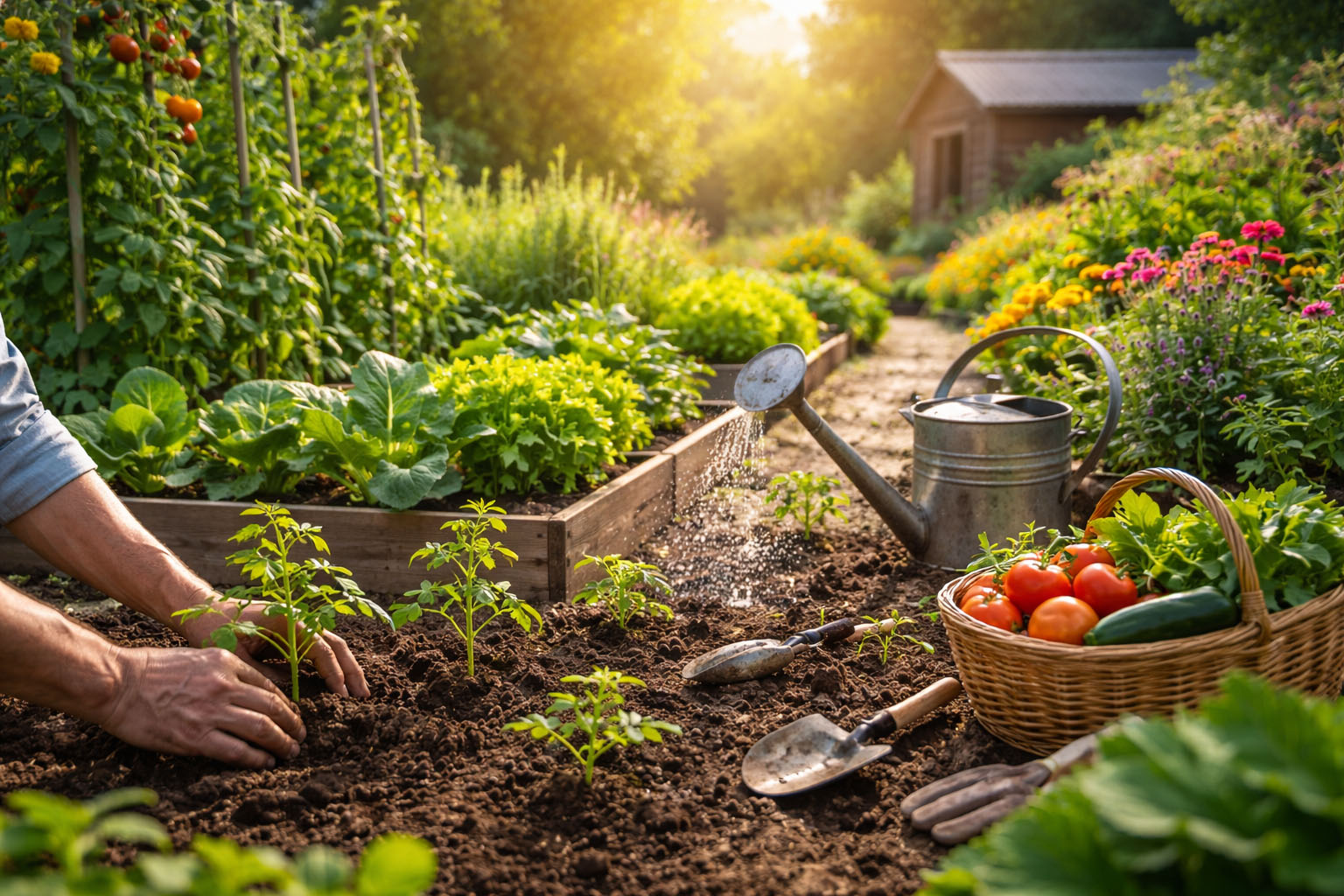
Gardening is not only about soil and seeds—it is about timing, observation, and consistency. Knowing when to plant, when to water, when to cut, and how to protect plants from cold makes the difference between a struggling garden and one that stays green, productive, and healthy throughout the year.
This guide covers essential gardening knowledge every gardener must know, whether you are growing vegetables, flowers, herbs, or ornamental plants.
When Is the Best Time to Put Seeds in the Ground?
1. Understand Soil Temperature, Not Just the Calendar
Seeds germinate based on soil warmth, not air temperature.
- Cold-season crops (lettuce, spinach, peas, onions):
Plant in early spring or late summer - Warm-season crops (tomatoes, cucumbers, peppers, beans):
Plant only after frost risk has passed
Rule of thumb:
If the soil is cold and wet, seeds will rot instead of sprout.
2. Best Planting Times by Season
- Spring: Most vegetables, herbs, and flowers
- Summer: Fast-growing greens, herbs
- Autumn: Garlic, onions, overwintering crops
- Winter: Indoor seed starting only
3. Always Prepare the Soil
- Loosen soil to improve root growth
- Add compost or organic matter
- Avoid planting in compacted or waterlogged soil
When Is the Best Time to Water Plants?
Morning Watering Is Best
The early morning (6–9 AM) is ideal because:
- Water reaches roots before evaporation
- Leaves dry during the day, reducing disease
- Plants are hydrated before heat stress
Avoid These Watering Mistakes
- Watering at night → promotes fungus
- Light, shallow watering → weak roots
- Watering leaves instead of soil
How Often Should You Water?
- Vegetables: 2–3 times per week (deep watering)
- New plants: Daily for first 7–10 days
- Established plants: Less frequent but deeper
Tip: Stick your finger 5 cm into the soil. If it’s dry, it’s time to water.
When Is the Right Time to Cut and Prune Plants?
Why Pruning Is Important
- Encourages new growth
- Improves air circulation
- Prevents disease
- Shapes plants properly
Best Time to Prune
- Spring: Most flowering plants and shrubs
- After flowering: Roses and decorative plants
- Autumn: Remove dead or diseased branches only
- Never prune heavily in winter (except dormant trees)
Pruning Rules Every Gardener Should Know
- Use clean, sharp tools
- Cut above a healthy bud
- Remove dead, yellow, or crossing branches
- Do not over-prune—plants need leaves to survive
How to Protect Your Garden From Cold Weather and Frost
Simple Frost Protection Methods
- Cover plants with fleece, fabric, or old blankets
- Use mulch to protect roots
- Move potted plants closer to walls or indoors
- Water soil lightly before frost (moist soil holds heat)
Plants Most Sensitive to Cold
- Tomatoes
- Peppers
- Basil
- Cucumbers
- Young seedlings
Important: Remove covers during the day to avoid overheating.
Essential Gardening Tips for a Fresh and Healthy Garden
Feed Your Soil, Not Just Your Plants
Healthy soil = healthy plants
- Add compost twice a year
- Use organic fertilisers
- Avoid chemical overuse
Control Weeds Early
- Mulch regularly
- Remove weeds before they flower
- Weeds steal water and nutrients
Rotate Crops Every Year
- Prevents soil exhaustion
- Reduces pests and diseases
- Improves harvest quality
Observe Your Garden Daily
Early signs of problems:
- Yellow leaves
- Wilting
- Spots or holes
- Slow growth
Catching issues early saves plants.
Common Gardening Mistakes to Avoid
- Planting too early in cold soil
- Overwatering
- Ignoring pruning
- Using poor-quality soil
- Forgetting seasonal protection
Gardening Is a Rhythm, Not a Race
A successful garden depends on timing, care, and understanding nature’s cycles. When you plant at the right time, water correctly, prune wisely, and protect your plants from cold, your garden will stay fresh, productive, and beautiful throughout the year.
Gardening is not about perfection—it is about consistency and learning from your plants.